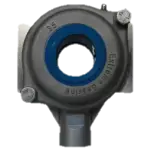
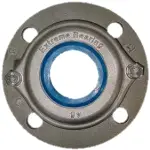
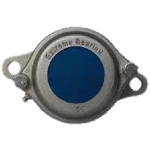
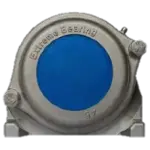
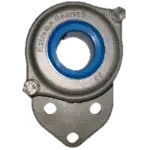
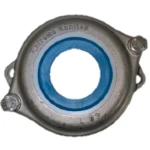
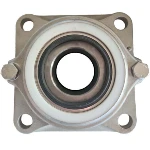
Suitable bearing types for every bearing housing model
All bearing types, with their unique technical properties, fit every housing model!
Discover the best bearing type for every SS316 housing model. Read key technical specs, explore their ideal applications, and click through for full details!
Double row spherical roller bearings
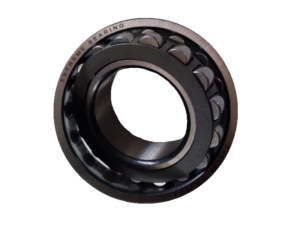
Engineers select double-row spherical roller bearings for extreme duty. Consequently, these units absorb heavy radial loads, severe misalignment, and intense vibration. Read more!
Tapered roller bearing
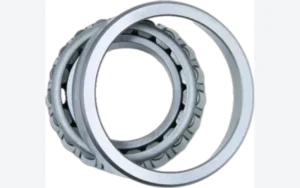
Heavy combined forces demand exceptional rigidity. Consequently, tapered roller bearings master high radial and axial loads with supreme stability. Read full details!
Sealed double row spherical roller bearings
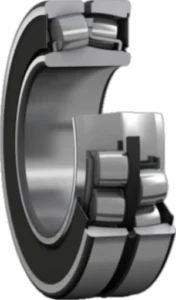
Standard spherical roller bearings offer excellent mechanical strength. However, sealed double-row versions master contaminated environments and harsh lubrication challenges. Read full details!
Double row deep groove ball bearing
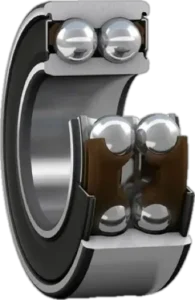
Choose double-row deep groove ball bearings for smooth, high-speed operation. Consequently, these units absorb moderate axial forces while keeping operational noise minimal. Read full details!
Self-aligning double row ball bearing
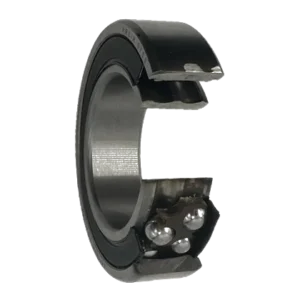
High-speed applications demand smooth, low-friction operation. Consequently, self-aligning double-row ball bearings excel under light to moderate loads while minimizing energy loss. Read full details!
Single-Row Roller Bearing
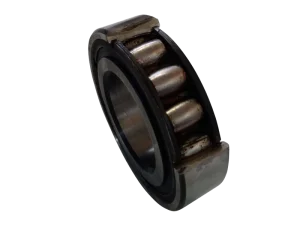
A single-row roller bearing is chosen for higher rotational speeds and lower loads, with the added benefit of integrated seals that keep the rolling elements protected even when the housing seals wear.
Axial Thrust Roller Bearings
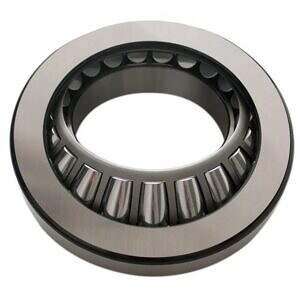
High axial forces demand extreme strength parallel to the shaft. Consequently, axial thrust roller bearings absorb heavy thrust loads using a self-aligning spherical track. Read details!
Bearing shaft retaining
Technicians mount Extreme Bearing units onto the shaft using either mechanical locking—such as set screws or adapter sleeves—or an interference fit via press-fitting or retaining compounds like Loctite. Consequently, mechanical locking greatly simplifies setup and removal. In contrast, interference-fit mounting delivers superior concentricity and higher torque transmission.
| Mounting Method | Shaft Damage | Torque Capacity | Ease of Removal | Cost |
|---|---|---|---|---|
| Set Screws | High | Medium | Good | Low |
| Locking Adapter / Sleeve | None | Very High | Good | Medium-High |
| Press Fit | None | Very High | Poor | Medium |
| Loctite (Retaining Compound) | None | High–Very High | Poor | Low-Medium |
Summary: Set screws are simple and economical but can damage the shaft. Locking adapters/sleeves provide the most reliable mechanical fixation without shaft damage. Press fits and Loctite retaining compounds create an interference fit with excellent
Adapter sleeve mounting
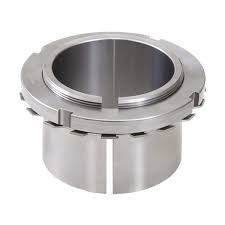
Perfect, firmly concentric fit on the shaft.Mounting a bearing with an adapter sleeve is technically the best mounting option.
Set screw mounting
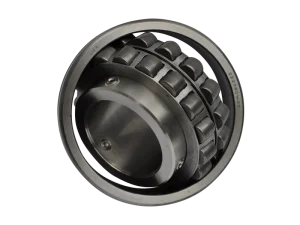
Easy, quick mounting with a set screw. Fast installation on a bare shaft, ideal for light to moderate load applications where quick assembly is required.
Cylindrical bore mounting
Cylindrical bore for mounting on a bare shaft. Slides onto a turned shaft seat for a precise interference fit—the most compact shaft fixation option.