
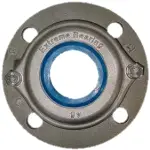
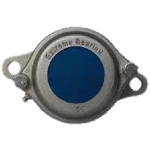
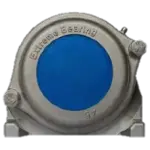
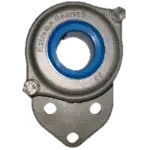
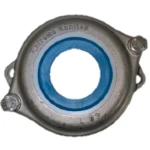
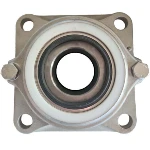
Where Extreme Bearings feel at home
Extreme Bearings in the Mussel Industry – Built for Performance in Challenging Environments
In the demanding world of the mussel industry, reliability is essential. Extreme Bearings, including stainless steel 316 mounted bearing units, are designed to perform under harsh marine conditions where corrosion resistance, durability, and consistent operation are critical.
From processing equipment to washing systems and handling applications, these advanced bearing solutions help keep operations running smoothly — even when exposed to saltwater, moisture, heavy loads, and continuous use.
With stainless steel designs and application-focused engineering, Extreme Bearings have become a trusted solution for the mussel industry, supporting efficient production and minimizing maintenance in one of the most challenging industrial environments.
The Extreme Bearing Advantage
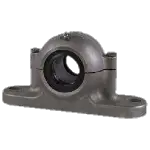
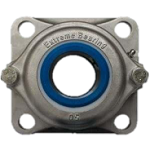
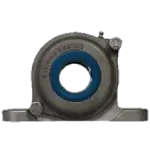
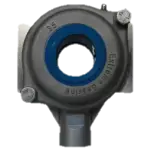
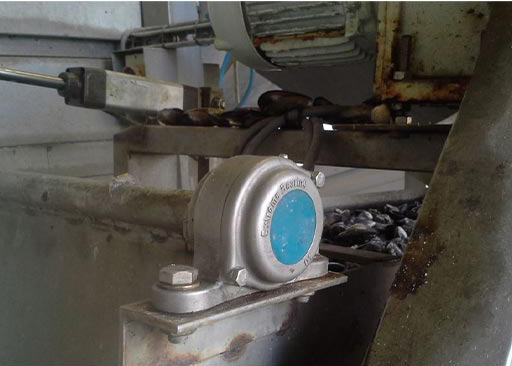
What makes the Extreme Bearing unique is the combination of a stainless steel housing, an integrated adapter sleeve, and a specially designed centrifugal seal. This advanced design allows the bearing unit to handle high radial and thrust loads while maintaining low friction and reliable performance in demanding environments.
This unique combination delivers exceptional strength and durability, providing a solution that goes beyond conventional bearing units. The custom-designed housing is developed specifically for challenging applications where standard bearing solutions are unable to meet the requirements.
For the mussel industry, where equipment is continuously exposed to moisture, saltwater, and heavy operation, the Extreme Bearing has proven its value. Designed to withstand extreme conditions, it delivers a significant increase in service life and reduces the need for frequent replacement and maintenance.
A bearing built for the toughest environments — delivering performance that truly lives up to its name.
Proven Performance in the Most Challenging Environments
The true strength of the Extreme Bearing is proven in real-world applications. During inspections in the mussel processing industry, Extreme Bearings have shown outstanding durability and reliability, continuing to perform even after long periods of intensive use.
The mussel industry represents one of the toughest environments for bearing technology, with constant exposure to saltwater, sand, moisture, and abrasive shell particles. If a bearing can perform under these extreme conditions, it is built to perform anywhere.
Originally developed for the demanding requirements of the mussel industry, the Extreme Bearing has expanded into many other applications worldwide where reliability, corrosion resistance, and long service life are essential.
Extreme conditions demand Extreme Bearings.
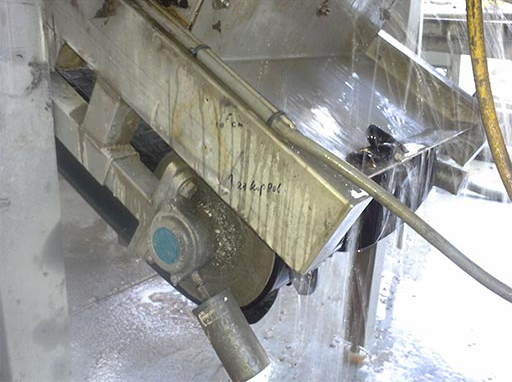
Submerged in boiling water with hot ashes

The shaft in this application drives a slow-moving conveyor operating at just 1.5 to 2 rpm. Despite the low speed, this creates extremely high torque and a significant load on the bearing system — conditions that would quickly damage a conventional bearing.
The Extreme Bearing is specifically designed to withstand these heavy loads, combined with elevated operating temperatures. Its robust construction ensures reliable performance even under extreme mechanical stress.
Advanced sealing technology and high-quality grease protect the spherical roller bearings from both water and dirt ingress, ensuring continuous operation. If contamination were to enter the system, failure would be inevitable — but the Extreme Bearing is engineered to prevent this from happening, maintaining performance where others would fail.
You won’t see much more extreme conditions than this. The bearing is submerged in boiling hot water. While hot ash and embers are floating around. All it would take to ruin a normal bearing is for some of the water to get inside. Or for hot ash to come into contact with the seal on the outside. And destroy it. We know this because all normal bearings that the company Stamag in Landsberg, Germany, had tried for this application had failed. Sooner or later. Stamag supplies bearings and other parts for large incinerators burning waste.
Conveyor belt
A common design feature of these German incinerators is to let the glowing embers and ashes fall into a tank of water below. And be extinguished underwater. The ash is then transported up and out of the water on a conveyor belt. Into a skip for disposal. Part of this conveyor belt can be seen in the right of the picture. And the large links of the chain operating the conveyor are shown as well.
Customization
Stamag was in need of a reliable solution for a highly demanding application. “We don’t sell bearings, we sell solutions,” says the managing director.
In close collaboration with the inventor of the Extreme Bearing, Jaap Meeuwsen, a customized bearing solution was developed specifically for this extreme application. The result is a tailored design that meets the highest requirements in performance, durability, and reliability.
This partnership highlights the strength of combining engineering expertise with application-driven thinking to create bearing solutions that go beyond standard products.
Problem solving
The solution they designed is called by its full name: EXT 80 CL C3 20. Where 80 stands for the diameter of the shaft in centimetres. The CL seal with PTFE lips is pressed into the adapter sleeve. And leaves a tiny gap of only 0.02 mm so no debris can penetrate through. And reach the bearing, which becomes completely enclosed. A silicone grease was chosen as the most durable lubricant. For the extreme temperatures of this application.
Maintenance-free for at least 10 years
This specially designed Extreme Bearing is expected to operate reliably and maintenance-free for at least 10 years, and potentially even longer. In contrast, conventional bearings in similar applications typically failed within weeks or months.
Because these bearings operate underwater, failures often occurred without warning. When breakdowns happened, the tank had to be drained and the shaft was frequently damaged, requiring replacement.
Such failures led to significant unplanned downtime, bringing normal incinerator operations to a halt and resulting in costly interruptions. The Extreme Bearing solution eliminates these risks by delivering long-term reliability in the most demanding conditions.
“We work in harsh environments and therefore we use Extreme Bearings”

The latest seaweed harvester developed by Asco Harvester. You can see the blue caps of the Extreme Bearings used on shafts of the conveyor.
“We have designed various barges that all have a considerable amount of bearings. These barges are all for work in harsh environments. Therefore we use Extreme Bearings in all our long-term designs.
For example, the Asco Viking Harvester barge has 68 bearings. All of which play an important role. The seaweed harvester has two conveyor belts. One of which is constantly submerged. There is also a special machine that needs to hold a sack weighing up to 2 tonnes when full. A total of 8 bearings are used to ensure that this machine runs smoothly.
Bearings on such machines and conveyors need to withstand a great deal of stress, impact, seawater, sunlight, frost and heat. We use organic grease to lubricate the bearings about once a week. They retain grease well and we find this amount of lubrication is sufficient.
We started using Extreme Bearings in 2016. We had previously installed bearings with plastic housings from another manufacturer but replaced them all in 2017.
Our experience is very good with all the Extreme Bearings we have used. We have not had to replace any of them. And we do not see the need to do this for the next few years. In our designs, we think the main advantages of Extreme Bearings are strength, durability, good design, many types to choose from and easy ordering.
We have been working on the design of new equipment for the last two years and have just built the Sigri 9057. Which is a barge specially built for seaweed harvesting. Great interest in our harvesting machines has come from many countries. Such as Norway, Mexico, Canada and the US.”
Ómar Arndal Kristjánsson
Manager at Asco Harvester since 2016
Used on high-speed shrimp peeling line

Long bending drums, axial force and high speeds but
Extreme Bearings take the strain
In a shrimp peeling machine used at a factory run by International Shellfish. In the Dutch town of Yerseke. The drums are only 1 inch in diameter. The length of the shafts is 3 metres. And the shafts are rolling extremely fast. This means the drums have a tendency to bend and normal bearings cannot cope well with the high speeds. And extreme axial displacement.
In addition, the conditions are corrosive with the presence of saltwater. And the use of caustic chemicals for cleaning. Only one bearing was considered good enough for this application: the Extreme Bearing. The Extreme Bearing selected absorbs misalignment without generating force in the bearing. This ensures a long bearing working life.
Peat and roots don’t stop an Extreme Bearing
An engineering company in Mechelen in Belgium was designing equipment for the automatic handling of vegetables such as lettuces in greenhouses.
The company wanted bearings that were out of the ordinary. Due to the difficult dirty conditions on the conveyor belt with wet peat and roots. Normal bearings would soon become clogged up and inoperative.
It took two years of thorough testing before the company decided on the best bearing for this application. Finally in January 2016, they chose the 1-inch diameter Extreme Bearing for their new equipment.

After two years of tests, Extreme Bearings chosen for vegetable handling in Belgium

An acid-proof bearing – here’s the proof!
Extreme Bearings have been installed in the machinery used for pickling mussels. At the Prins & Dingemanse factory in Yerseke, the Netherlands.
As shown here, the bearings are placed right above a bath of concentrated acid. The fumes are extremely strong. And are enough to corrode a normal bearing. However, the Extreme Bearing has been in operation so far for 24 months at this factory without any problems.
The Extreme Bearing with a housing made of 316 grade stainless steel has an excellent seal that keeps out the acidic vapours and protects the bearing from corrosion.
Robust bearings in pet food factory
The bearings for this application were ordered by an engineering company who were commissioned to design a pet food plant in the Netherlands.
They had read about Extreme Bearings online and decided that this was the bearing they were looking for. Meat and other moist ingredients such as fat could easily drip down from the conveyor onto the bearings so a robust, durable bearing was needed.

Conveyor belt with dripping meat and fat.
No downtime despite cracked shells and seawater
In the Dutch seaside town Yerseke, mussels are a big industry. The photo shows the start of a conveyor belt which is carrying mussels at the Prins & Dingemanse factory in Yerseke, The Netherlands. An Extreme Bearing has been fitted on the belt and is clearly visible with its blue end cover. The Extreme Bearing is surrounded by fragments of broken shells while salt water is running down from the conveyor.
Maintenance-free
When the end cover was removed after one year of operation, and the bearing was inspected, there were no signs of contamination or wear. Despite the extreme conditions. The end cover was put back on. Thereupon the mussel line could continue working without interruption.

The bearing is heavily loaded and constantly drenched with seawater

For bearing units on places which are difficult to maintain
Ideal in inaccessible places
Extreme Bearings provide a long working lifetime for applications in difficult-to-reach places, where maintenance needs to be reduced to a minimum. This could be high places or deep under water.
Tipping Bucket uses any available water supply (potable, ground water, treated effluent)
Case Study: Thermal Expansion of Stainless Steel Tipping Buckets in a Stormwater Tank (Madrid)
The Customer’s Challenge
Cleaning stormwater tanks using tipping buckets is one of the most effective and proven methods worldwide for removing sediment and silt from the floor. After a heavy storm, the retention tank fills with water. Once the tank is emptied, these massive buckets automatically tip due to their specific geometry as their reservoirs fill up. The powerful tidal wave generated by this action thoroughly flushes and cleans the surface.
For a major installation in Madrid, three of these tipping buckets were installed, each suspended from two bearings. However, the client encountered a persistent and complex mechanical issue: despite all bearings being tightened firmly to the shaft, the entire tipping bucket assemblies were moving horizontally (axially) through the bearings. This caused severe, unwanted mechanical stress on the installation.
At the time, we received the following specific technical inquiry from the client:
“We have an issue in one installation of our tipping buckets, where we have installed your bearings. We have 3 tipping buckets installed in a storm tank, each is suspended from 2 bearings. (…) The issue is the following: We have all the bearings tighten to the axis, and we found that the buckets are moving horizontally through the bearings. Do you know how it can be possible? Your assistance is appreciated!”
Our Analysis & The Root Cause
The engineering team at Extreme Bearing immediately investigated this case. The culprit turned out to be a well-known physical phenomenon: extreme linear thermal expansion.
The entire installation in Madrid is mounted on a heavy, massive concrete frame. Due to its thermal mass, concrete expands negligibly under the sun. However, the meters-long tipping buckets are manufactured entirely from stainless steel. When the intense Spanish sun beats down on the empty stainless steel buckets, a massive linear expansion of the metal occurs. Because the concrete frame remains rigid and stationary, immense axial forces were generated, literally forcing the shafts through the standard bearings.
The Technical Solution
To absorb this unavoidable linear elongation without any issues, Extreme Bearing supplied heavy-duty stainless steel pillow block bearings (specifically engineered in SS316 / A4 grade), featuring a smart, integrated technical modification:
-
Integrated Linear Compensation: These stainless steel pillow block bearings are uniquely designed to accommodate axial displacement (the expansion and contraction of the shaft) internally. This prevents the housing from being put under stress while maintaining a secure grip on the shaft.
-
Superior Corrosion Resistance: Manufactured entirely from high-grade SS316, these stainless steel pillow block bearings provide maximum resistance against the highly humid, corrosive, and aggressive environment of a stormwater tank.
-
Shock Load Endurance: Engineered to withstand the heavy impacts and alternating loads that occur the exact moment the massive buckets tip and release their water volume.
The Result
Thanks to the built-in technical flexibility of our stainless steel pillow block bearings, the thermal expansion of the stainless steel tipping buckets is now flawlessly absorbed. Mechanical stress and premature wear have been permanently eliminated. The installation in Madrid has been operating completely trouble-free and reliably for many years.
Extreme Bearing: Engineering premium stainless steel pillow block bearings for environments where conventional bearings fail.
Avoid downtime at car washes, save on spare parts

On two shafts of a conveyor belt that moves a car through the various machines of a conveyor tunnel car wash.

Extreme Bearings (not visible here) were used below ground level.

Oily dirt from cars is caked onto this Extreme Bearing. But the seal remains intact.
Imagine the scene: it is a hot summer day on a Saturday morning. And a long queue of cars is waiting to enter their local car wash to get cleaned. Suddenly the automatic car wash system breaks down due to a faulty bearing. Which has become ruined by the penetration of dirt and water. The owners of the car wash station may not be able to get service staff to fix the machine. Meanwhile, their car wash business is losing revenue. While their customers are driving away disappointed.
This may be a familiar scenario because of the extreme conditions in a car wash. And the use of bearings not fit for purpose.
Durable solution
Normal bearings in automatic car wash conveyor systems typically need to be replaced every 3–6 months. With the Extreme Bearing solution, maintenance intervals are dramatically extended, with an expected service life of 8–10 years under proper operating conditions.A leading solution has made it possible to integrate Extreme Bearings into car wash systems for the first time, offering operators a significant improvement in reliability and reduced maintenance requirements.This innovation helps minimize downtime, lower maintenance costs, and improve overall system efficiency in demanding continuous-operation environments.
Application
Extreme Bearings with a diameter of 60 mm were first tested on their conveyor system. For 12 months with excellent results and no maintenance needed. Now the company is recommending all its customers to buy car wash systems fitted with Extreme Bearings.
A total of four bearings are located on the conveyor on two shafts that move a car slowly through the car wash tunnel. These bearings are right in the fire line for water, detergents and dirt that run off from dripping wet cars. And in winter, the run-off water can also include salt spread on roads. Nevertheless, the cap and seal on the Extreme Bearing keep the dirt and water out. Giving the bearing an extremely long life.
Into the future
So far, the Extreme Bearings have been successfully tested in conveyor systems that guide vehicle wheels at ground level. Future applications may also include brush drive systems within car wash installations, further expanding their use within this industry.The car wash sector represents a new but highly promising market for Extreme Bearings, offering significant opportunities for improved performance and reliability in demanding operating conditions.This development highlights the growing need for advanced bearing solutions that can deliver longer service life, reduced maintenance, and consistent performance in continuous-use environments.
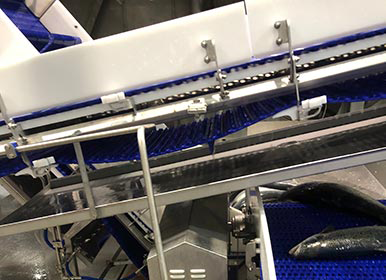
High-pressure cleaning with harsh chemicals gave previous bearings a high failure rate
Extreme Bearings cut downtime in fish factory
The Extreme Bearing with its stainless steel housing was tested by a salmon and trout producer in northern Norway. Their fish factory was able to significantly extend the lifetime of the bearings on one of the machines on their line. They experienced a significant reduction in downtime. Their previous type of bearings had a high failure rate, causing the need for frequent maintenance. High-pressure cleaning takes place at up to 30 bar so a bearing needs to be specially designed to be able to resist the penetration of water and chemicals. Extreme Bearings are highly resistant to the harsh industrial chemicals used for cleaning on fish processing lines.
Food on the move
Extreme Bearings are, as the name implies, designed for use in harsh environments. Where relatively cheaper alternatives soon fail. These kinds of environments can be found in the food industry.
Typical conditions:
-
Cleaning with a high-pressure jet and aggressive chemicals
-
Heavy conveyor belts for fruit and vegetables
-
Places where the metal is attacked by fruit juices
-
Fruit and vegetables are washed and sorted with the aid of water
Common problems, such as damaged or cracked inner rings and malfunction of the bearing housing, are prevented by Extreme Bearings.
The AISI 316 stainless steel housing provides resistance to corrosion. The application of special seals and the filling of grease contributes to a perfectly sealed housing.

Perfect for fresh fruit and vegetable conveyor belts