DESCARGAR PDF
Descargue las instrucciones de montaje completas en PDF para consulta offline e impresión.
Descargar PDF
Vista general de las piezas
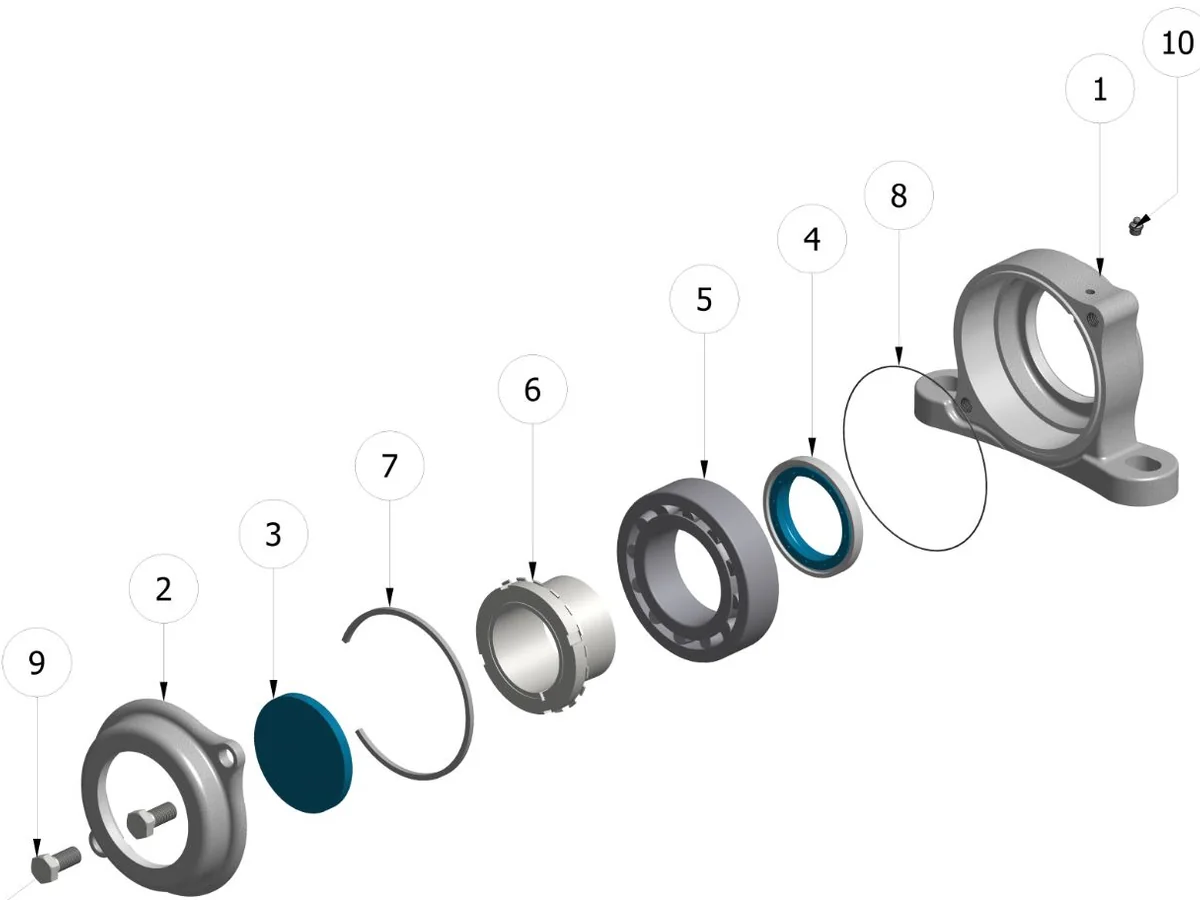
Cada unidad Extreme Bearing consta de los siguientes componentes:
- Carcasa — carcasa principal del rodamiento (acero inoxidable 316)
- Tapa — placa de tapa frontal
- Sello de la tapa — sello en el lado de la tapa
- Sello trasero — sello en el lado de la carcasa
- Rodamiento — rodamiento de rodillos esféricos
- Manguito de fijación — para montaje en el eje
- Anillo de posicionamiento — posicionamiento axial
- Junta tórica — sellado adicional
- Pernos — fijación de la tapa
- Engrasador — para lubricación
Puntos a considerar antes del montaje
1. Comprobar la tolerancia del eje
El eje debe estar limpio, seco y libre de grasa.
Asegúrese de que el eje esté libre de cualquier daño en la superficie, como rebabas de prisioneros y arañazos. Si no es así, elimine las rebabas y los arañazos con una lima fina. Preferimos una lima fina antes que un lienzo de esmeril, de modo que solo elimine los puntos altos sin afectar la tolerancia principal del eje.
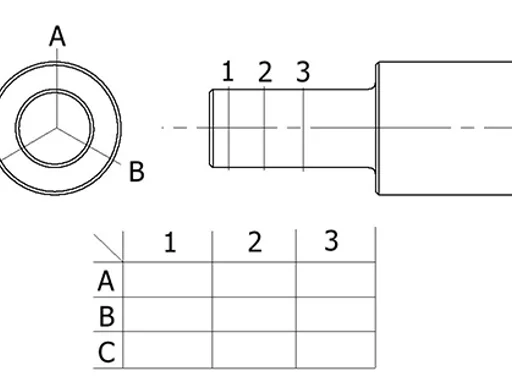
Compruebe si el asiento del rodamiento del eje está dentro de la tolerancia, preferiblemente en tres secciones transversales separadas 20 mm en la posición donde se colocará el rodamiento. Estas posiciones se muestran como 1, 2 y 3 en el diagrama y deben tomarse tres mediciones alrededor de la sección transversal en A, B y C.
2. Comprobar la dureza y la rugosidad superficial del eje
La dureza del eje debe ser como mínimo de HRc 55. En general, los ejes de acero al carbono o acero inoxidable son los más adecuados. Lo que es aún más importante que un ajuste correcto por interferencia del retén de aceite es una superficie del eje perfectamente lisa en la zona del sello.
En circunstancias normales, el eje en la zona del sello debe tener una rugosidad superficial de aproximadamente:
| Parameter | Value |
|---|---|
| Ra | 0.4 to 0.8 μm |
| CLa | 8 to 25 μm |
| Rz | 1.0 to 4.0 μm |
| Rmax | ≤ 6.3 μm |
3. Decidir el lado fijo
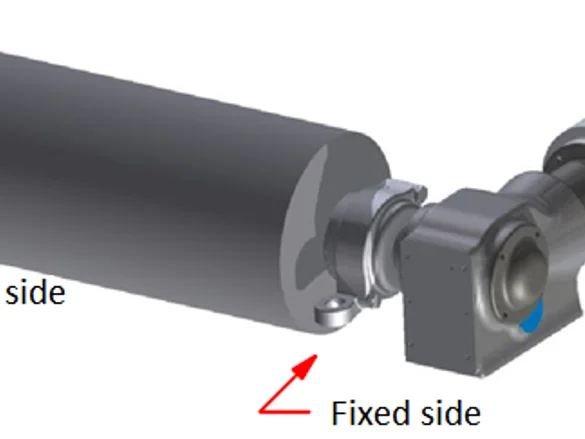
Cada eje tendrá una ubicación de rodamiento fija (montada primero) y una ubicación flotante (montada segunda).
Si se va a usar un Extreme Bearing en un eje de transmisión, es necesario que el lado fijo sea el lado del accionamiento del motor. Para minimizar el riesgo de cualquier confusión, recomendamos firmemente que el lado fijo sea el lado de accionamiento, como se muestra en el diagrama.
4. Permitir la expansión y contracción térmicas
Hay un huelgo total disponible para la expansión térmica que es igual al grosor del anillo de posicionamiento. La expansión y contracción del material debe considerarse para mantener el huelgo necesario para que el rodamiento funcione bien.
En el diagrama, el huelgo para la contracción por enfriamiento se indica con C y el huelgo para la expansión por calentamiento se indica con B.
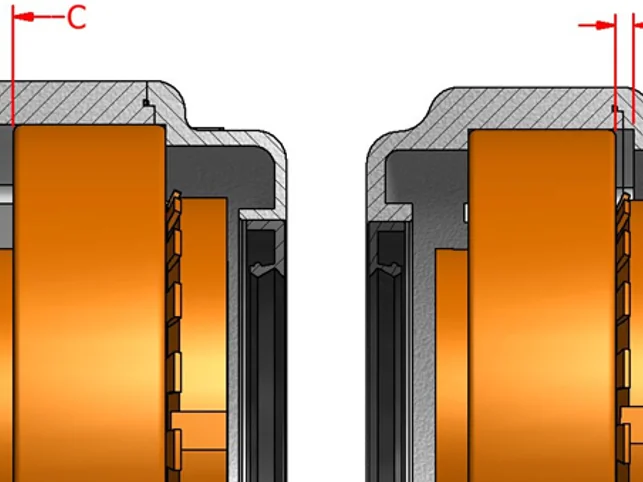
La tabla muestra los valores máximos de C y B en función del diámetro del eje:
| Shaft Ø (mm) | C, Max. Cooling shrinkage (mm) | B, Max. Heating expansion (mm) |
|---|---|---|
| 20 | 3.5 | 3.5 |
| 25 | 3.5 | 3.5 |
| 30 | 3.5 | 3.5 |
| 35 | 3.5 | 3.5 |
| 40 | 3.5 | 3.5 |
| 45 | 4 | 4 |
| 50 | 4 | 4 |
| 55 | 4 | 4 |
| 60 | 4 | 4 |
| 70 | 5 | 5 |
| 80 | 5 | 5 |
| 100 | 10 | 10 |
Calcule la longitud máxima del eje en función de la temperatura de su aplicación. En caso de que necesite montar un eje largo, es necesario calcular la expansión o contracción térmica y ajustar la posición del rodamiento para tenerlo en cuenta.
Ejemplos de expansión térmica:
- Un eje de acero inoxidable de 1 metro se hará 0,023 mm más largo cuando la temperatura aumente 1°C
- Un eje de acero al carbono de 1 metro se hará 0,016 mm más largo cuando la temperatura aumente 1°C
Longitud máxima del eje por contracción térmica
Valores en metros por grado Kelvin/Celsius de variación de temperatura:
| Eje (mm) | 10C | 20C | 40C | 50C | 60C | |||||
|---|---|---|---|---|---|---|---|---|---|---|
| Inox | Acero | Inox | Acero | Inox | Acero | Inox | Acero | Inox | Acero | |
| 20 | 9.38 | 12.50 | 4.69 | 6.25 | 2.34 | 3.13 | 1.88 | 2.50 | 1.56 | 2.08 |
| 25 | 9.38 | 12.50 | 4.69 | 6.25 | 2.34 | 3.13 | 1.88 | 2.50 | 1.56 | 2.08 |
| 30 | 9.38 | 12.50 | 4.69 | 6.25 | 2.34 | 3.13 | 1.88 | 2.50 | 1.56 | 2.08 |
| 35 | 9.38 | 12.50 | 4.69 | 6.25 | 2.34 | 3.13 | 1.88 | 2.50 | 1.56 | 2.08 |
| 40 | 9.38 | 12.50 | 4.69 | 6.25 | 2.34 | 3.13 | 1.88 | 2.50 | 1.56 | 2.08 |
| 45 | 9.38 | 12.50 | 4.69 | 6.25 | 2.34 | 3.13 | 1.88 | 2.50 | 1.56 | 2.08 |
| 50 | 9.38 | 12.50 | 4.69 | 6.25 | 2.34 | 3.13 | 1.88 | 2.50 | 1.56 | 2.08 |
| 55 | 9.38 | 12.50 | 4.69 | 6.25 | 2.34 | 3.13 | 1.88 | 2.50 | 1.56 | 2.08 |
| 60 | 9.38 | 12.50 | 4.69 | 6.25 | 2.34 | 3.13 | 1.88 | 2.50 | 1.56 | 2.08 |
| 70 | 18.75 | 25.00 | 9.38 | 12.50 | 4.69 | 6.25 | 3.75 | 5.00 | 3.13 | 4.17 |
| 80 | 18.75 | 25.00 | 9.38 | 12.50 | 4.69 | 6.25 | 3.75 | 5.00 | 3.13 | 4.17 |
| 100 | 14.38 | 19.17 | 7.19 | 9.58 | 3.59 | 4.79 | 2.88 | 3.83 | 2.40 | 3.19 |
Longitud máxima del eje por expansión térmica
Valores en metros por grado Kelvin/Celsius de variación de temperatura:
| Eje (mm) | 10C | 20C | 40C | 50C | 60C | |||||
|---|---|---|---|---|---|---|---|---|---|---|
| Inox | Acero | Inox | Acero | Inox | Acero | Inox | Acero | Inox | Acero | |
| 20 | 12.50 | 16.67 | 6.25 | 8.33 | 3.13 | 4.17 | 2.50 | 3.33 | 2.08 | 2.78 |
| 25 | 12.50 | 16.67 | 6.25 | 8.33 | 3.13 | 4.17 | 2.50 | 3.33 | 2.08 | 2.78 |
| 30 | 12.50 | 16.67 | 6.25 | 8.33 | 3.13 | 4.17 | 2.50 | 3.33 | 2.08 | 2.78 |
| 35 | 12.50 | 16.67 | 6.25 | 8.33 | 3.13 | 4.17 | 2.50 | 3.33 | 2.08 | 2.78 |
| 40 | 12.50 | 16.67 | 6.25 | 8.33 | 3.13 | 4.17 | 2.50 | 3.33 | 2.08 | 2.78 |
| 45 | 15.63 | 20.83 | 7.81 | 10.42 | 3.91 | 5.21 | 3.13 | 4.17 | 2.60 | 3.47 |
| 50 | 15.63 | 20.83 | 7.81 | 10.42 | 3.91 | 5.21 | 3.13 | 4.17 | 2.60 | 3.47 |
| 55 | 15.63 | 20.83 | 7.81 | 10.42 | 3.91 | 5.21 | 3.13 | 4.17 | 2.60 | 3.47 |
| 60 | 15.63 | 20.83 | 7.81 | 10.42 | 3.91 | 5.21 | 3.13 | 4.17 | 2.60 | 3.47 |
| 70 | 12.50 | 16.67 | 6.25 | 8.33 | 3.13 | 4.17 | 2.50 | 3.33 | 2.08 | 2.78 |
| 80 | 12.50 | 16.67 | 6.25 | 8.33 | 3.13 | 4.17 | 2.50 | 3.33 | 2.08 | 2.78 |
| 100 | 48.13 | 64.17 | 24.06 | 32.08 | 12.03 | 16.04 | 9.63 | 12.83 | 8.02 | 10.69 |
Inox = acero inoxidable, Acero = acero al carbono
Procedimiento de montaje paso a paso
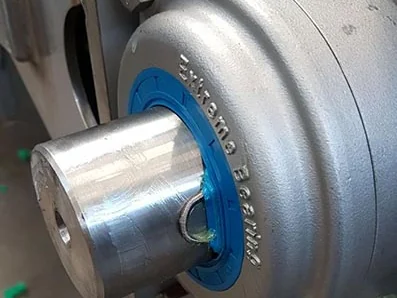
UNIDADES DE RODAMIENTO HERMÉTICAS A LA PRESIÓN
En algunas configuraciones, las unidades de rodamiento de Extreme Bearing son herméticas a la presión. Por lo tanto, es necesario mantener la tapa un poco abierta mientras se hace el engrase inicial. De lo contrario, pueden ocurrir problemas.
Además, cuando sea necesario añadir más grasa más adelante, debe tener siempre cuidado de no crear sobrepresión en la carcasa.
Las unidades Extreme Bearing son herméticas a la presión cuando se usan con las siguientes configuraciones de sellos:
- AS/AS
- AS/VK
- CL/CL
- CL/VK
CONSEJO PRO
Después de llenar con grasa, podría ser útil quitar completamente los engrasadores y sustituirlos por un perno estándar de acero inoxidable, para que sea imposible cometer errores. Por favor, informe a su equipo de mantenimiento sobre esta instrucción de servicio especial.
Compatibilidad con grasa
Todas las versiones de Extreme Bearing aceptan todos los tipos de lubricantes utilizados actualmente en equipos de transmisión de potencia.
¿Necesita soporte técnico?
Si algo no está claro, no dude en contactarnos para más información. Nuestros ingenieros estarán encantados de ayudarle con preguntas de instalación, resolución de problemas y soporte para aplicaciones personalizadas.